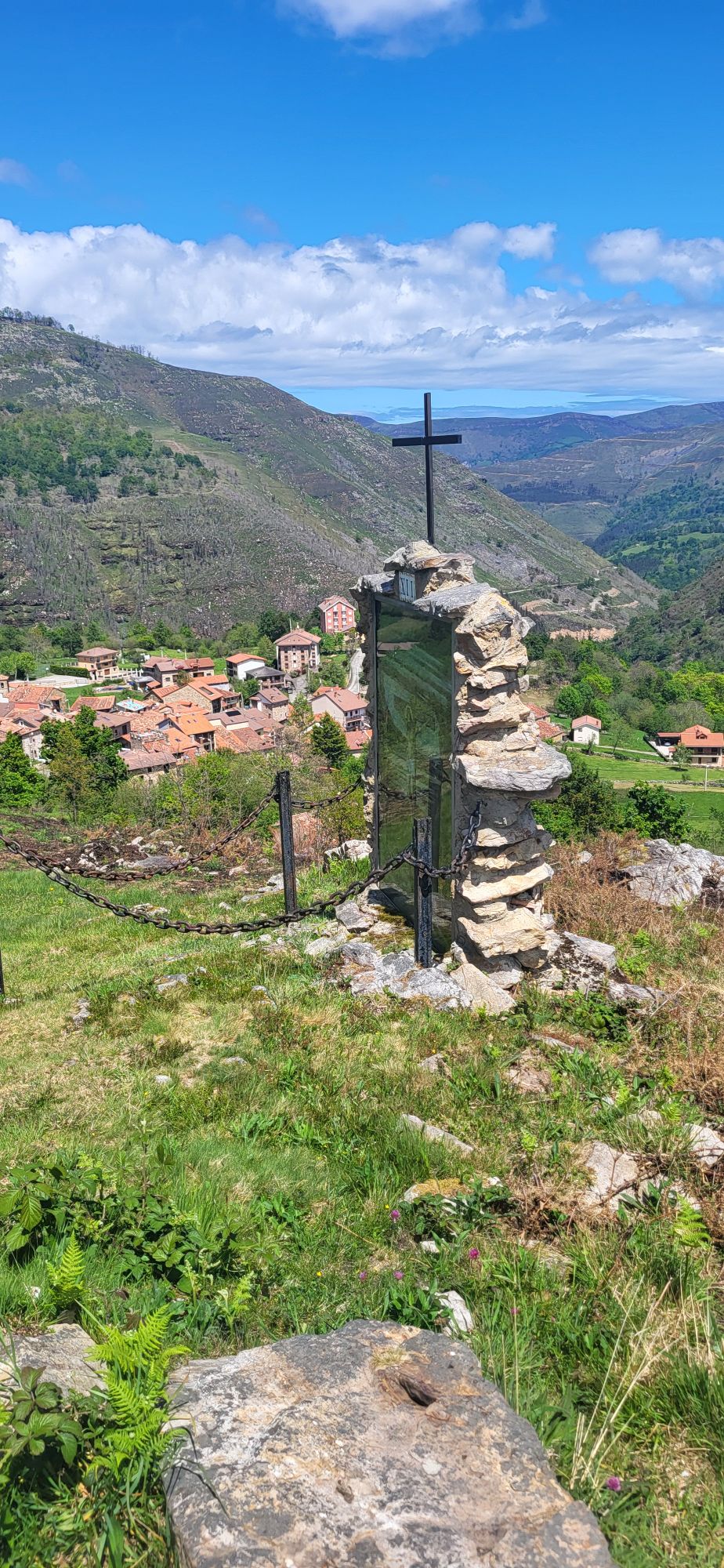
Since the apparitions of San Sebastián de Garabandal began in June 1961, faithful researchers and mariologists have strived to understand the precise sequence of end-time events announced by Our Lady to the four young visionaries.
Among these promises, the Great Miracle (El Gran Milagro) stands as the central pivot: a visible, undeniable, and permanent supernatural sign designed to bring about the conversion of the world.
While the exact year remains known only to God and to the main visionary, Conchita González, Our Lady provided a detailed set of criteria. By cross-referencing these prophetic conditions with Church liturgy, historical milestones, and biblical chronologies, one date stands out with unprecedented clarity: Thursday, April 13, 2034.
1. Garabandal: The Direct Continuation of Fátima
Garabandal cannot be understood in isolation; it is the direct and necessary continuation of the message of Fátima. This spiritual link was powerfully affirmed by Bishop João Pereira Venâncio of Leiria-Fátima, who explicitly declared that the message of Garabandal is identical to that of Fátima, updated for our modern era.
The Prophetic Mirror: The 4-Year Pattern (1789–1793 vs. 2029–2033)
The spiritual connection between Fátima, the Consecration of Russia, and historical delays is rooted in a profound historical precedent:
* 1689: Through Saint Margaret Mary Alacoque, Our Lord asked King Louis XIV to consecrate France to His Sacred Heart. The monarchy ignored this request.
* 1789: Exactly 100 years later, Louis XVI lost his absolute throne on June 17, 1789, as the Third Estate declared itself the National Assembly.
* 1793: Exactly 4 years later, Louis XVI was executed on the scaffold in January 1793.
In August 1931, during an apparition in Rianjo (Spain), Our Lord explicitly referenced this tragedy when warning Sister Lucy regarding the delay in consecrating Russia:
“Make it known to My ministers, given that they follow the example of the King of France in delaying the execution of My command, they will follow him into misfortune.”
On June 13, 1929, in Tuy (Spain), Our Lady solemnly requested the Consecration of Russia. The 100th anniversary (June 13, 2029) marks a critical spiritual threshold.
Notice the striking 4-year timeline mirroring the French Monarchy:
* 1789 to 1793 (4 years):
From the loss of the throne to the execution of the King.
* 2029 to 2033 (4 years):
From the Centenary of the Request for Russia’s Consecration (June 13, 2029) to the Bi-Millennial Jubilee of Christ’s Passion and Resurrection (April 3–5, 2033).
This 4-year interval between 2029 and 2033 forms the final prophetic countdown leading directly into the Garabandal window of 2033–2034.
2. The Core Prophetic Criteria (1961–1965)
From the earliest interviews following the apparitions, Conchita outlined the exact parameters surrounding the Great Miracle:
* Day & Time: It will occur on a Thursday at 8:30 PM (Spanish time).
* Calendar Window: It will fall between the 8th and the 16th of March, April, or May.
* Liturgical Constraint: It will coincide with the feast day of a young martyr of the Eucharist (and will not coincide with a major feast of the Virgin Mary).
* The 12-Month Window: The Miracle will take place less than 12 months after the global Warning (El Aviso).
* The 8-Day Advance Notice: Conchita is personally charged by Our Lady with announcing the exact date of the Miracle to the world exactly 8 days in advance.
3. Why Holy Thursday (Including April 13, 2028) Is Definitely Excluded
In earlier research, dates such as April 13, 2028, were sometimes considered potential candidates for the Great Miracle. However, a strict verification against Roman Catholic liturgical law definitively rules out 2028 and any other year where April 13 falls on Holy Thursday.
The Liturgical Rule
The apparition criteria specify that the Miracle must take place on the feast day of a martyr of the Eucharist (identified as Saint Hermenegild, whose traditional feast is April 13th).
Under the Universal Norms for the Liturgical Year and the Calendar:
* During Holy Week—and specifically on Holy Thursday—the entire liturgy is strictly dedicated to the Institution of the Eucharist (In Cena Domini) and the Passion of Christ.
* All proper feast days of saints are completely suppressed and cannot be celebrated on Holy Thursday.
Since April 13, 2028, is Holy Thursday, Saint Hermenegild’s feast day cannot be commemorated on that date. Consequently, Holy Thursday is definitively excluded, leaving only “ordinary” Thursdays in Eastertide where Saint Hermenegild can be fully honored.
4. Unveiling the 8-Day Mystery: The Resurrection Link
For decades, commentators wondered why Our Lady specified an 8-day advance notice. Why 8 days instead of a week, a month, or a novena?
When we look at the historical and astronomical consensus surrounding the Passion of Christ, the reason becomes strikingly clear:
* Crucifixion Date: Modern astronomical calculations and biblical studies heavily identify Friday, April 3, 33 AD, as the exact date of Christ’s death.
* Resurrection Date: Christ rose from the dead 3 days later, on Sunday, April 5, 33 AD.
* The 2,000th Anniversary: April 2033 marks the exact bi-millennial jubilee of the Resurrection of Christ.
If an important prophetic milestone or Warning aligns with the anniversary of the Resurrection on April 5th, adding the mandatory 8-day notice window (5 + 8) leads directly to April 13th. What once seemed like an arbitrary number of days now reveals a deep, harmonic connection to the Resurrection of Our Lord.
5. The Convergence of Eschatological Milestones
The timeline surrounding 2034 forms a seamless progression across modern Marian history:
1. June 13, 2029 (Centenary of Tuy / Fátima): Marks 100 years since Our Lady requested the solemn Consecration of Russia in Tuy, Spain—echoing the 100-year warning of Rianjo (1689–1789).
2. 2029 – 2033 (The 4-Year Parallel): Exactly like the 4 years between the Fall of Louis XVI (1789) and his execution (1793).
3. April 3–5, 2033 (Bi-Millennial Jubilee of Redemption): The 2,000-year mark of Christ’s Passion and Resurrection.
4. 2033 – 2034 (The Warning Window): The Great Warning (El Aviso) occurs within the 12-month period leading up to the Miracle.
5. April 13, 2034 (THE GREAT MIRACLE): An ordinary Thursday of the Easter Octave (Easter being April 9, 2034), perfectly fulfilling the Feast of St. Hermenegild, the 8-to-16 date window, and the 8-day link from April 5.
6. Conchita’s Timeline
Born on February 7, 1949, Conchita González will be 85 years old in April 2034. This fits naturally within her lifetime, allowing her to fulfill her mission of delivering the 8-day warning to the global media and the Church.
After 2034, the next available non-Holy Thursday April 13th does not occur until 2045, when Conchita would be 96.
7. Statistical & Prophetic Probability Analysis: Why April 13, 2034, Holds an Estimated 85% to 90% Probability
When evaluating the vast timeline of potential dates for the Great Miracle, applying the strict overlay of all divine, historical, and liturgical filters narrows the field dramatically:
1. Calendar & Day Criteria: A Thursday between March, April, and May, falling specifically between the 8th and the 16th of the month.
2. Liturgical Exclusion: Excluding Holy Thursdays (which rules out candidate years like 2028).
3. Conchita’s Lifespan: Requiring the primary visionary (born 1949) to be alive, alert, and capable of addressing world media 8 days prior.
4. The 4-Year Eschatological Mirror: Aligning the 100-year Fátima timeline (2029) and the 2,000th Resurrection Jubilee (2033) with the historical precedent of 1789–1793.
5. The 8-Day Resurrection Harmonic: Connecting the April 5th Resurrection anniversary directly to April 13th (5 + 8 = 13).
Out of all possible calendar years across Conchita’s natural lifetime, Thursday, April 13, 2034, is the only date that satisfies 100% of these independent variables simultaneously.
While human prediction must always remain subordinate to God’s sovereign will, from a purely analytical, historical, and liturgical standpoint, Thursday, April 13, 2034, carries an estimated 85% to 90% probability of being the long-awaited date of the Great Miracle of Garabandal. The remaining margin belongs only to unexpected divine timelines or alternative interpretations of the “martyr of the Eucharist.”

Conclusion
As Bishop Venâncio underscored, Garabandal is the direct continuation and fulfillment of Fátima. From the 100-year warning of Rianjo to the 4-year mirror between 1789–1793 and 2029–2033, the search narrows significantly. The extraordinary convergence surrounding Thursday, April 13, 2034, stands out as the most liturgically, historically, and prophetically sound window for the Great Miracle.
Aviso
Donate and keep Garabandal News online :
https://www.paypal.com/donate/?cmd=_s-xclick&hosted_button_id=42GLHYN98VB66&ssrt=1789995924297
 Garabandal News
2034 is too far Aviso; There is no evidence for St Hermenegild being the eucharistic martyr and also Conchita said its not a spanish person.
LikeLike